

In my previous post (linked HERE), I shared 10 historical newspaper articles found on Newspapers.com that each refer to Gibraltar as an island before 1969. One of those articles dates all the way back to 1838 — nearly 200 years ago.
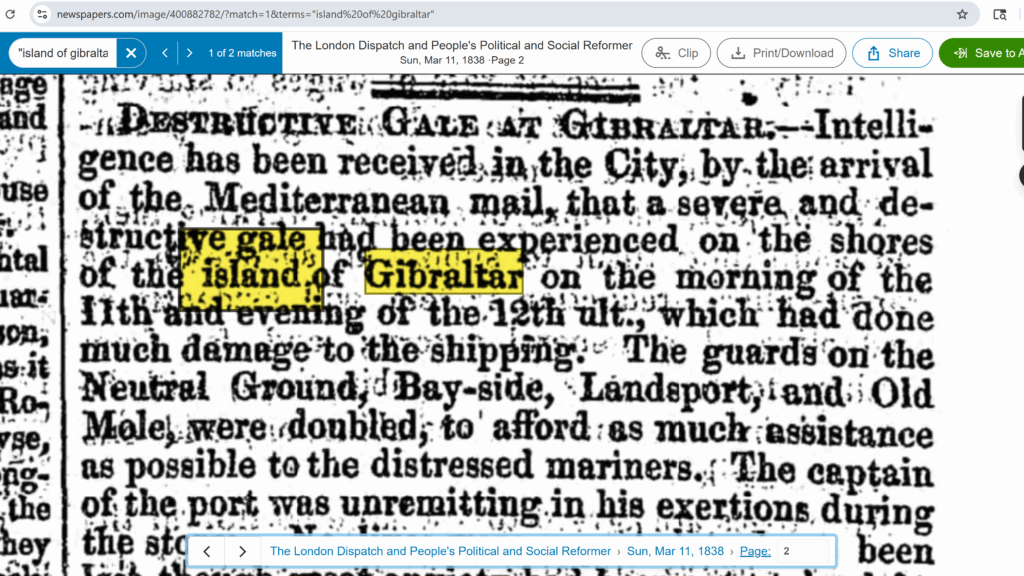
This discovery forced me to ask a deeper question:
Why has Gibraltar historically been referred to as an island for nearly two centuries?
Could there be lost or obscured history surrounding Gibraltar that no one seems to be aware about?
A Conversation That Changed the Direction of My Search
This question brought me back to a moment from my visit to Gibraltar — specifically, my meeting with Maria, the owner of Luis Photos, which appears in Episode 19 of The Lost Island of Gibraltar.
When I visited her shop, I was searching for reality residue — any photos, documents, or stories that might hint at Gibraltar once being an island. During our conversation, Maria mentioned something I had never heard before.
She claimed that there was once a canal built across the isthmus, just south of where the current airport is today — a canal that ran from the Bay of Gibraltar in the west to the Mediterranean Sea in the east.
She even stated that she had photos of this canal.
That stopped me cold.
No one else I spoke to in Gibraltar mentioned anything remotely like this. If true, a canal cutting across the isthmus would, by definition, separate Gibraltar from the mainland, turning it into an actual island.
Naturally, I had to investigate.
Digging Into the Canal Claim
After extensive research, I found no historical evidence that a canal was ever built across the Gibraltar isthmus.
This was strange, especially given Maria’s confidence — and her claim that photographic evidence existed, even though she ultimately couldn’t locate the photos in her shop.
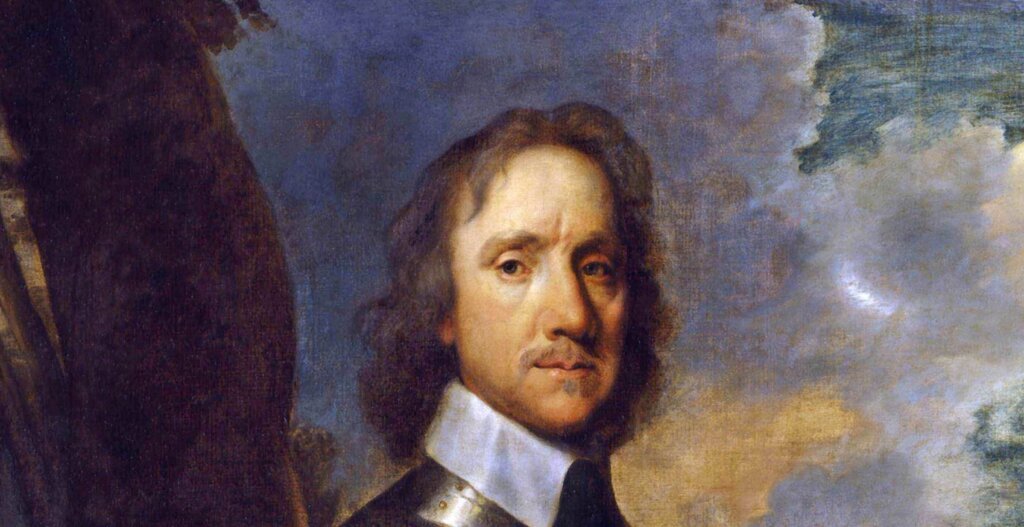
The only historical instance where a canal across the isthmus was ever discussed dates back to the early 1600s, when Oliver Cromwell reportedly suggested digging a canal to deliberately turn Gibraltar into an island for defensive purposes.
However, this idea was never carried out.
This is confirmed on the Wikipedia page for “Inundation, Gibraltar” (linked HERE), which clearly states that the canal proposal remained just that — a proposal.
The Only “Canals” That Ever Existed
The only other references I could find to anything resembling canals in the isthmus area were the so-called Caledonian Canals, constructed in the 1940s during World War II.
These were anti-tank defensive ditches, not waterways.
No water flowed through them.
They were never intended to connect the bay to the Mediterranean.
You can read more about them — and even see photographs — on the Government of Gibraltar’s Ministry for Heritage website (linked HERE).
So while they are misleadingly referred to as “canals,” they clearly do not qualify as the kind of canal that would separate Gibraltar from Spain.
Eliminating the Canal Hypothesis
At this point, after reviewing:
- Historical records
- Military defenses
- Government archives
- Secondary sources
It’s safe to say that no canal has ever existed that would have physically turned Gibraltar into an island.
As compelling as Maria’s story was, the canal explanation does not hold up under scrutiny.
So we can confidently cross that off the list.
So… What Gives?
If:
- Gibraltar was being called an island in 1838
- No canal ever existed
- The Franco border closure explanation only applies after 1969
Then we’re left with a far more uncomfortable question:
Why has Gibraltar consistently been referred to as an island for nearly 200 years?
At this point, the usual explanations fall apart.
And I think you already know my answer to that.
This wasn’t a mistake.
This wasn’t metaphor.
And this wasn’t political shorthand.
Gibraltar historically being referred to as an island are not errors, but layers of reality residue — evidence that remains consistent the deeper the investigation goes.