

In this post, I’ll be sharing photographic evidence from six physical books I’ve purchased online through sites like Amazon and eBay — books that contain what I consider to be clear reality residue of Gibraltar being an island.
For each book, I’ll be showing:
- A photo of the front cover
- A photo of the exact page where Gibraltar is referred to as an island
- The page number, so readers can verify it themselves
If you’re interested, you can purchase these books on your own and see this information firsthand.
These references to the island of Gibraltar are not simple mistakes. They are not typos, misunderstandings, or sloppy research. What they are displaying is information from a version of reality in which Gibraltar was experienced as an island.
The reason this information still exists is because that reality still exists.
What we’re seeing are small fragments — reality residue — lingering in this current reality.
Finding information we remember, those of us affected by this geographical Mandela Effect, is incredibly difficult. When we do find it, it’s almost equivalent to finding gold, because it helps solidify memories that many people share but struggle to prove.
That reality — the one where Gibraltar is an island — still exists. We simply can’t see it anymore. It has become part of what I describe as a hidden world.
You can think of it like tuning a radio. The station doesn’t disappear — it continues broadcasting on another frequency, parallel to the one we’re currently tuned into.
Book 1: Gibraltar by Philip Dennis
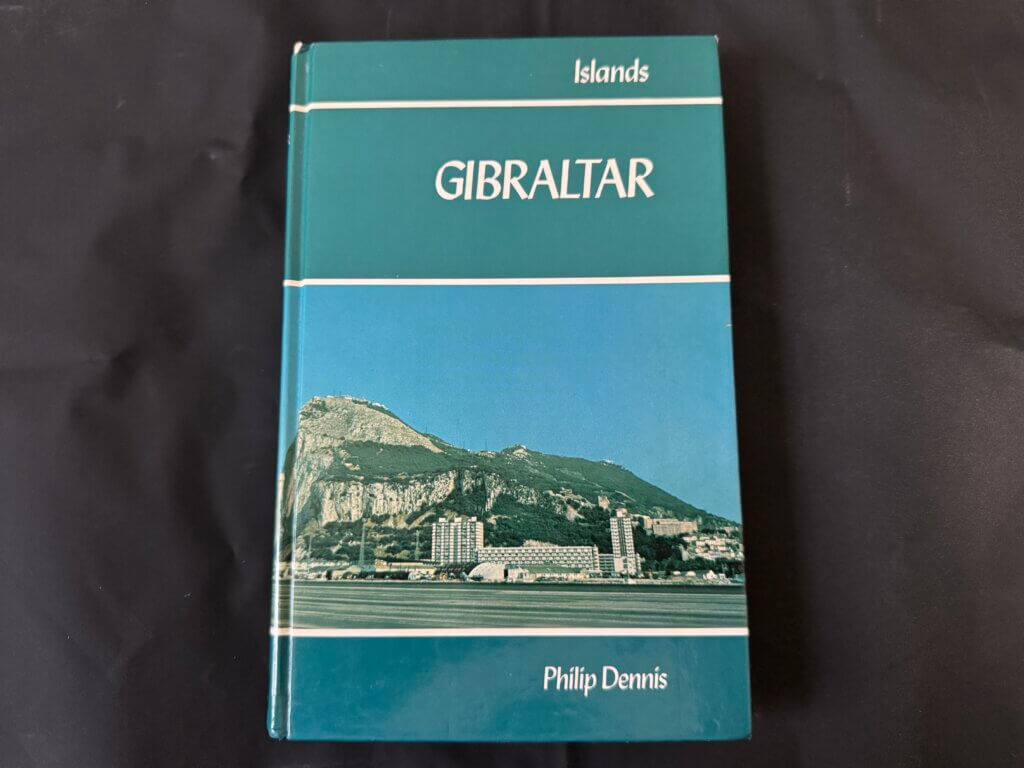
The first book I’ll be presenting is Gibraltar by Philip Dennis.
This book is part of a series dedicated to islands — and the reality residue is front and center.
Right on the cover, the key word “Islands” appears at the top, followed by “Gibraltar.” The implication is unmistakable: Gibraltar is being categorized as an island.
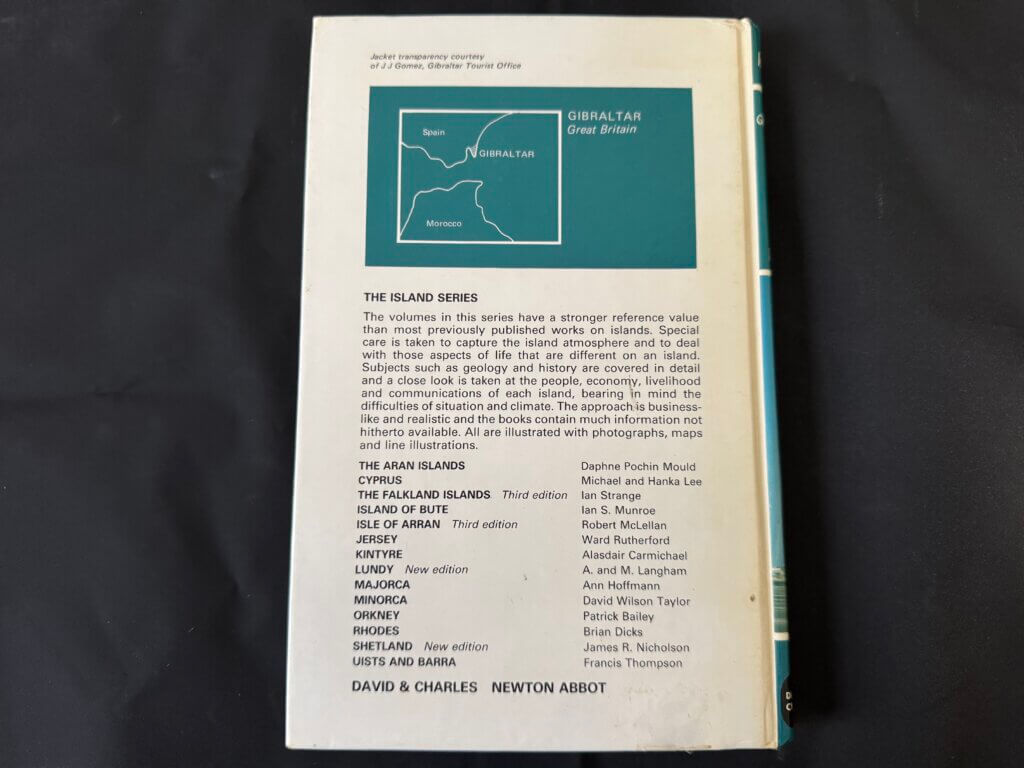
The back cover reinforces this by explicitly stating that the book is part of “The Island Series.”
Here’s where it gets even more interesting.
At the very top of the back cover, there is a map showing Gibraltar exactly as it exists today — a peninsula attached to Spain.
That doesn’t make sense.
What we are actually observing here is a blend of information:
- The classification comes from one reality (Gibraltar as an island)
- The map comes from another (Gibraltar as a peninsula)
This blending is precisely what reality residue looks like.
Understanding this phenomenon helps explain not just modern inconsistencies, but many ancient geographical mysteries as well.
Book 2: The Sea Is My Grave by John L. D. Barnett
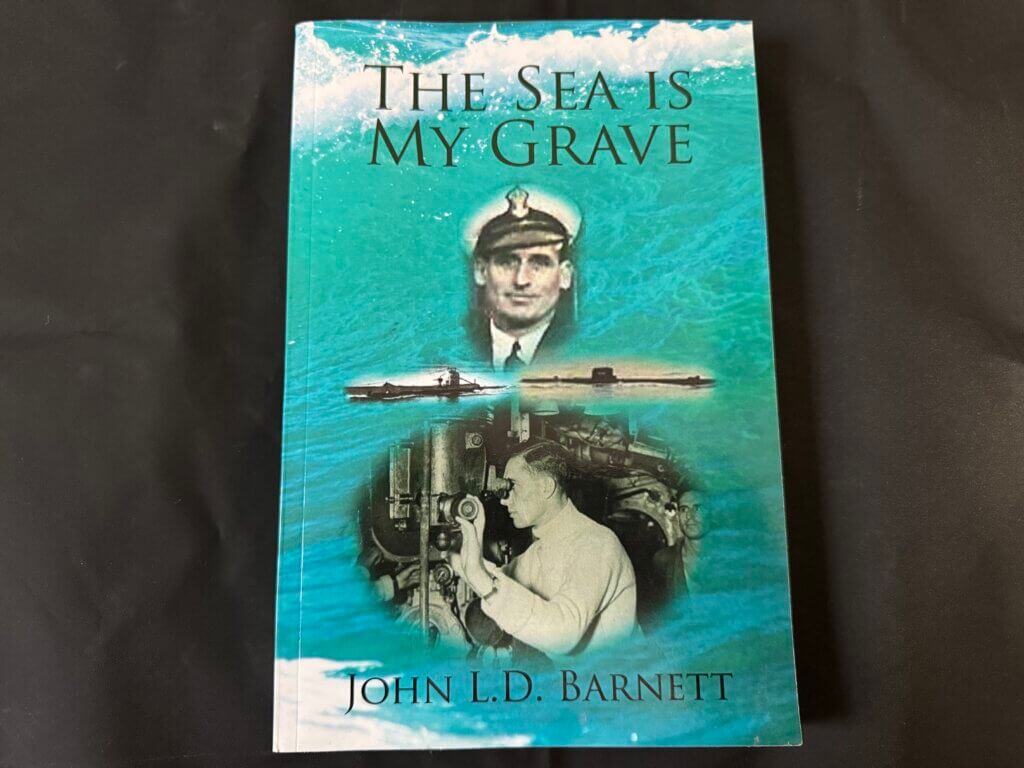
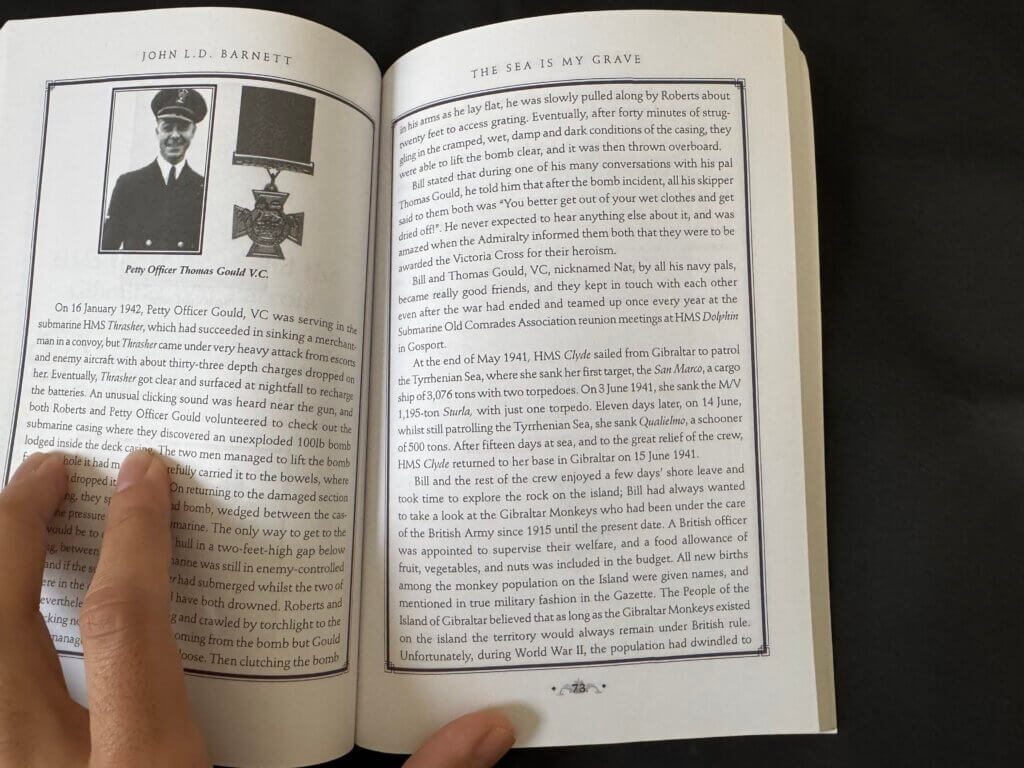
The second book is The Sea Is My Grave by John L. D. Barnett.
On page 73, Gibraltar is referred to as an island four separate times on a single page.
This is not a throwaway line.
This is a published book, written by an author who completed an entire manuscript, went through editing, and had it released publicly — yet Gibraltar is consistently described as an island.
The book itself is a maritime novel centered around the sea, conflict, and navigation. Given the subject matter, geography matters.
So the question becomes unavoidable:
How could an author write an entire book involving real locations and somehow get Gibraltar — a major geographic landmark — completely wrong?
Book 3: Buried Alive by Jack Cuozzo
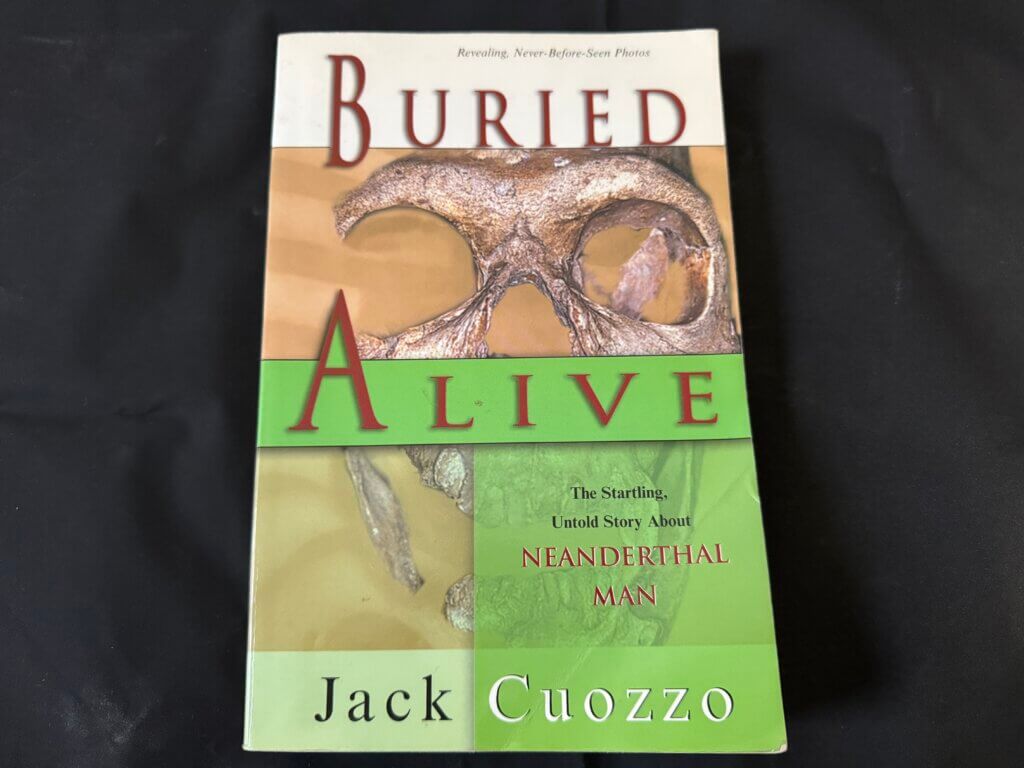
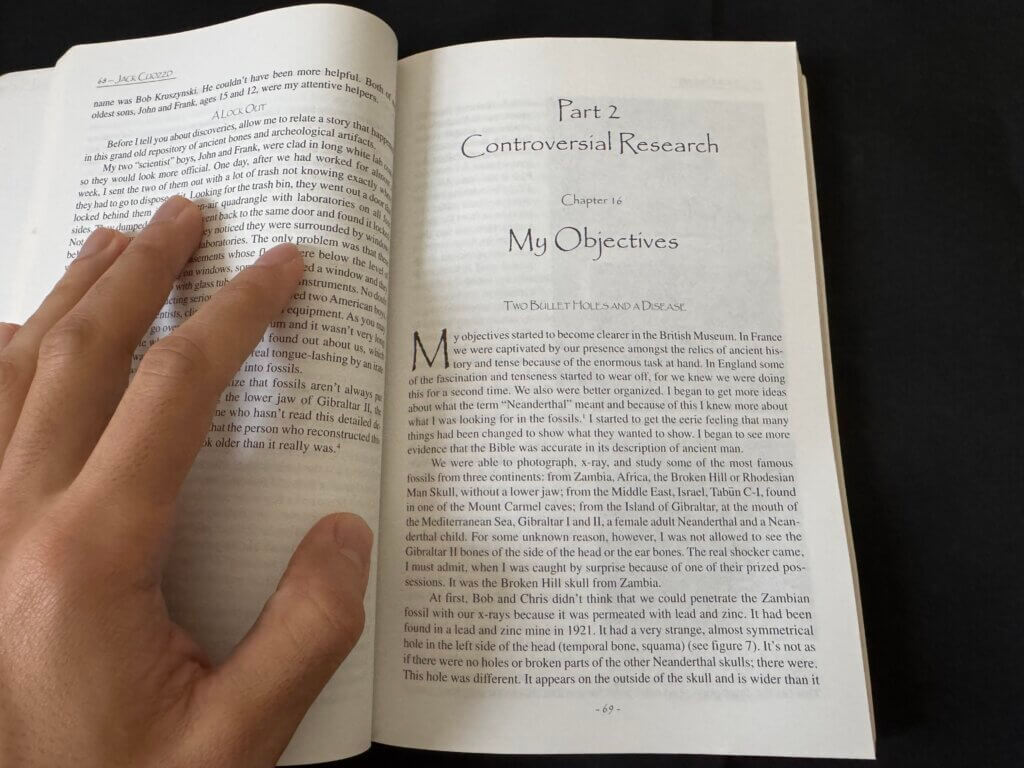
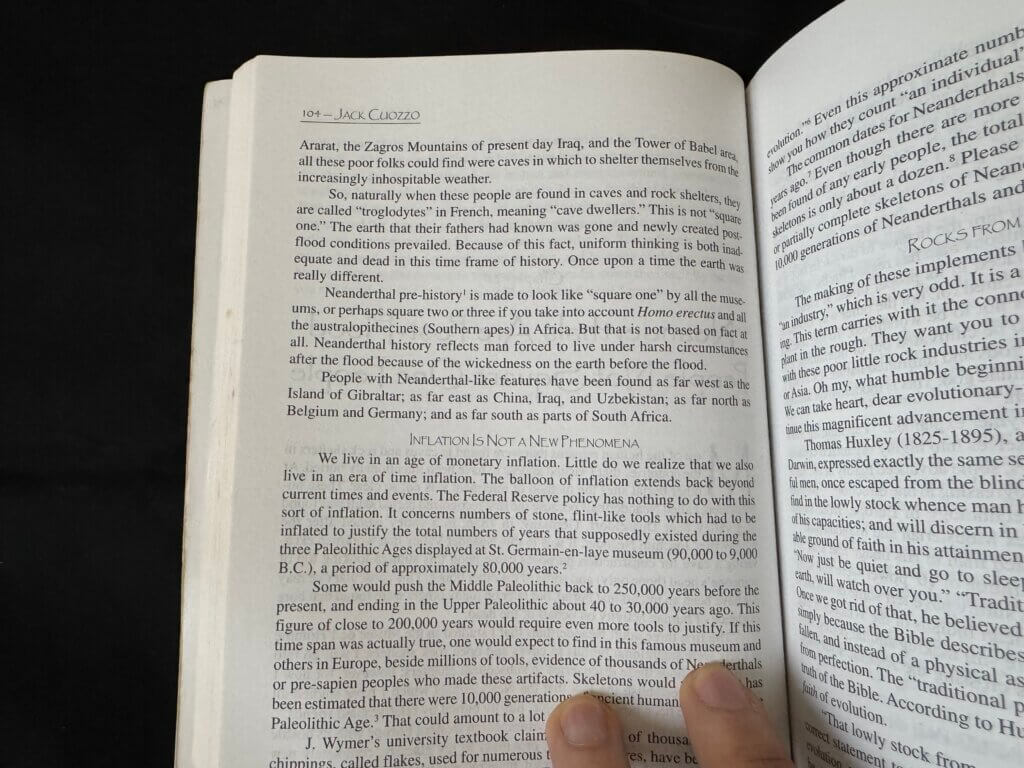
The third book is Buried Alive by Jack Cuozzo.
On pages 69 and 104, Gibraltar is explicitly referred to as an island.
This book focuses on Neanderthals and their discovery, including remains found on Gibraltar.
Here’s what makes this especially interesting:
Neanderthal remains have been discovered on Gibraltar — but not directly across the border in Spain.
In my opinion, that detail makes far more sense if Gibraltar was once isolated, rather than connected by land.
Once again, the geography described aligns far more cleanly with an island than with a peninsula.
Book 4: The Ultimate World War Two Trivia Book
by Richard Denham & M. J. Trow
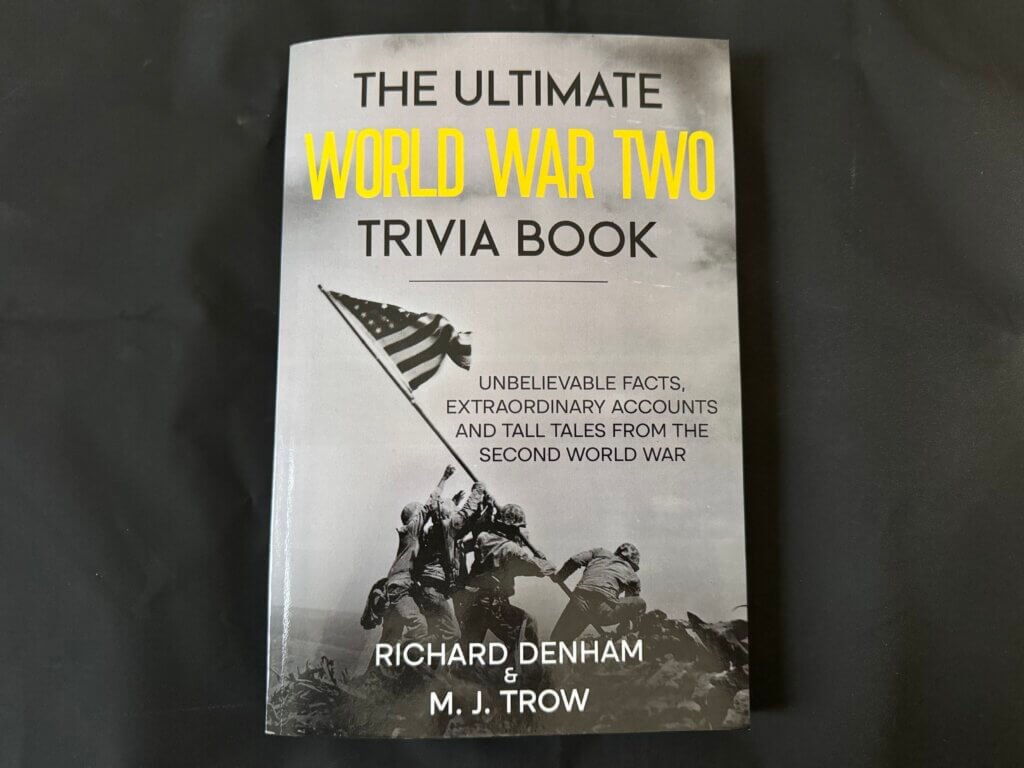
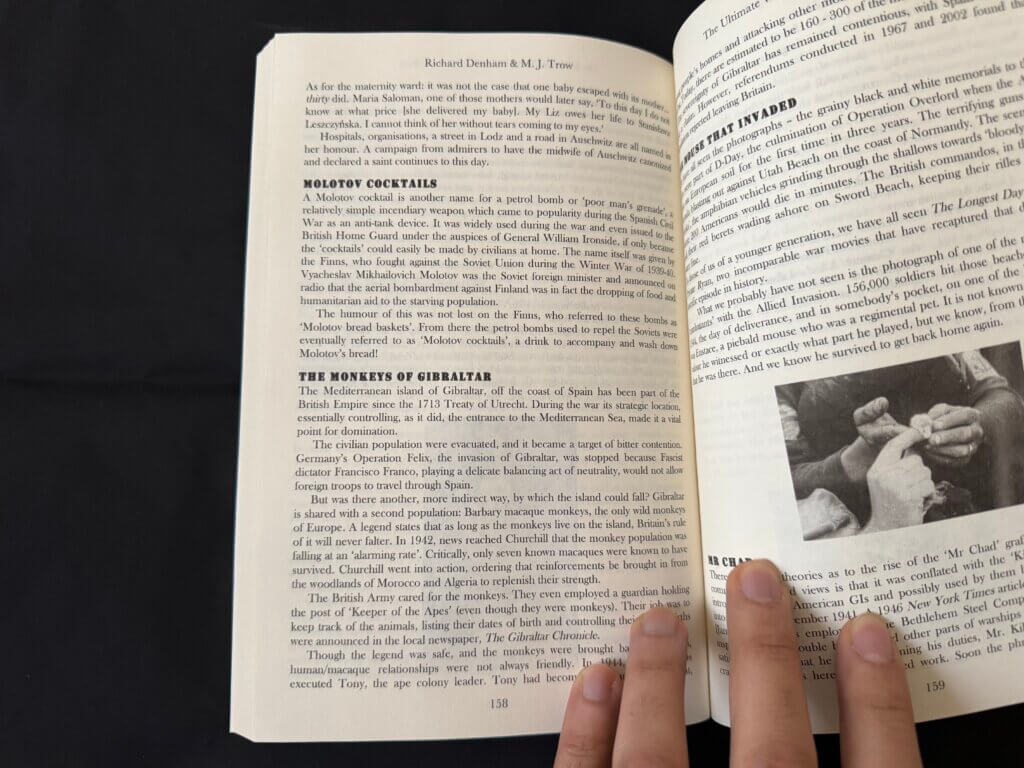
The fourth book is The Ultimate World War Two Trivia Book, which proudly states “Unbelievable Facts” right on the cover.
On page 158, the book discusses the famous monkeys of Gibraltar and refers to them as being found on this Mediterranean island.
Key word: island.
This is a trivia book — a book about facts.
Are we really supposed to believe this is just an error?
Or is this another example of factual information sourced from a version of reality where Gibraltar exists as an island?
Book 5: Animal Atlas (Smithsonian Illustrated)
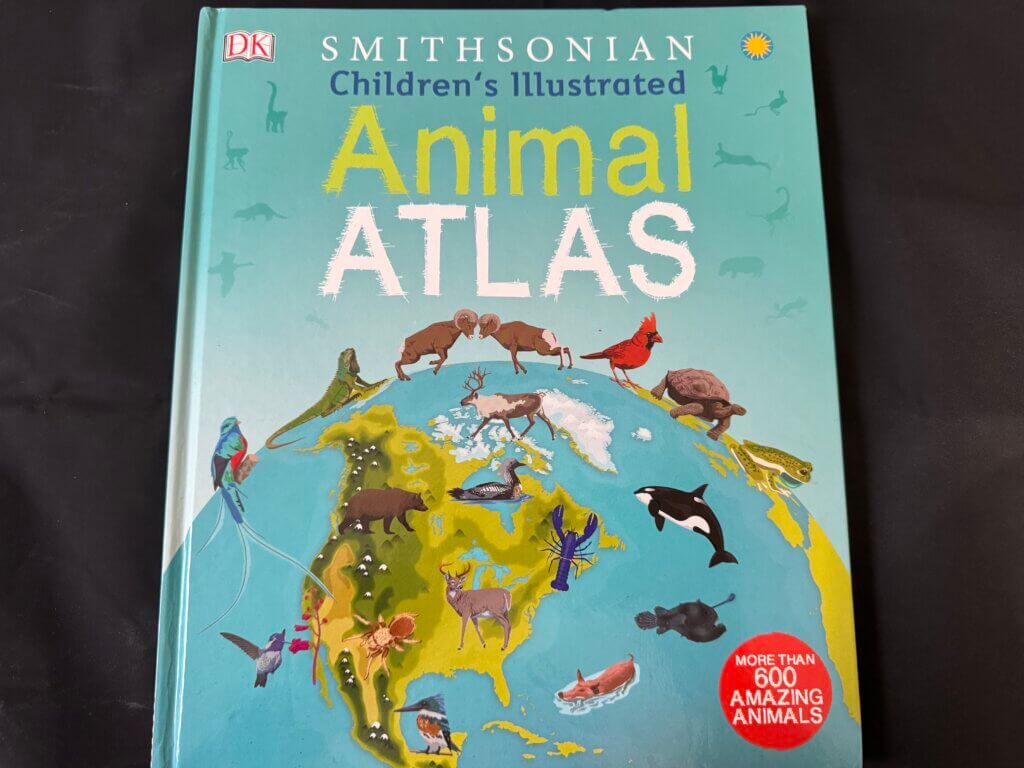
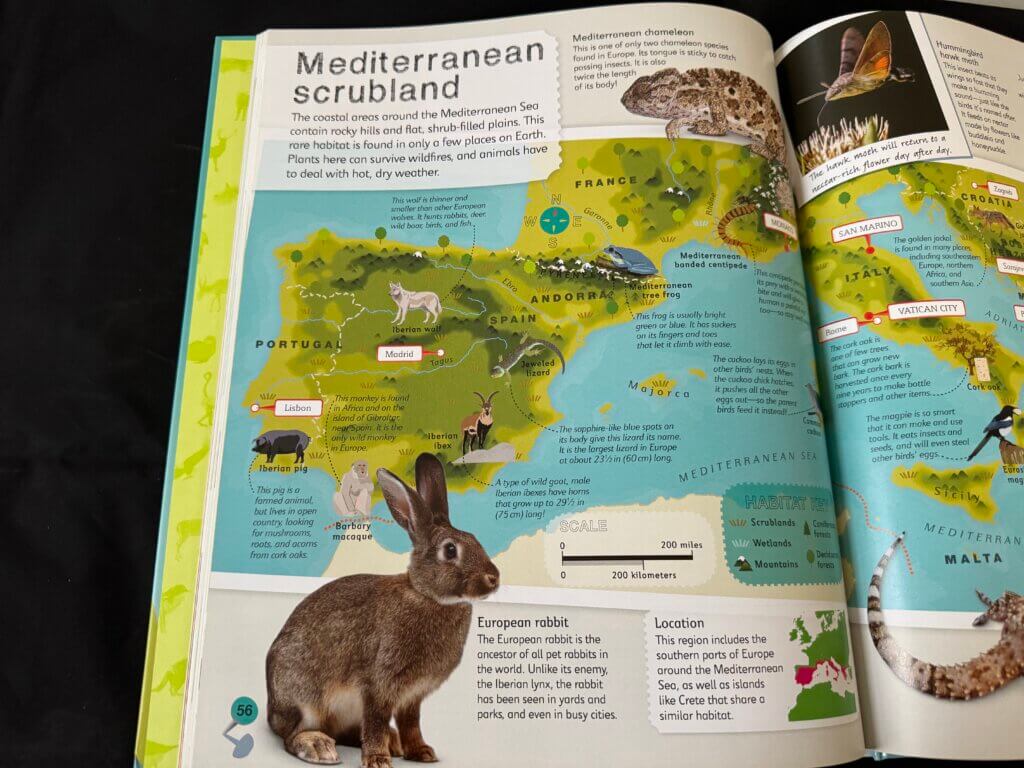
The fifth book is a children’s illustrated book titled Animal Atlas, published by the Smithsonian.
The Smithsonian is widely known for:
- Museums
- Research
- Historical accuracy
- Educational authority
On page 56, the book shows a map of the Iberian Peninsula with animals placed where they are found. A Barbary macaque is shown where Gibraltar is located — and the text states that the monkey is found on the island.
According to current geography, that is incorrect.
So how does an institution like the Smithsonian get this wrong?
These are exactly the kinds of “errors” that need deeper analysis. Rather than dismissing them, we should treat them as clues — fragments of information that help us decode hidden worlds.
Book 6: Curious Lists for Kids: Animals by Tracy Turner
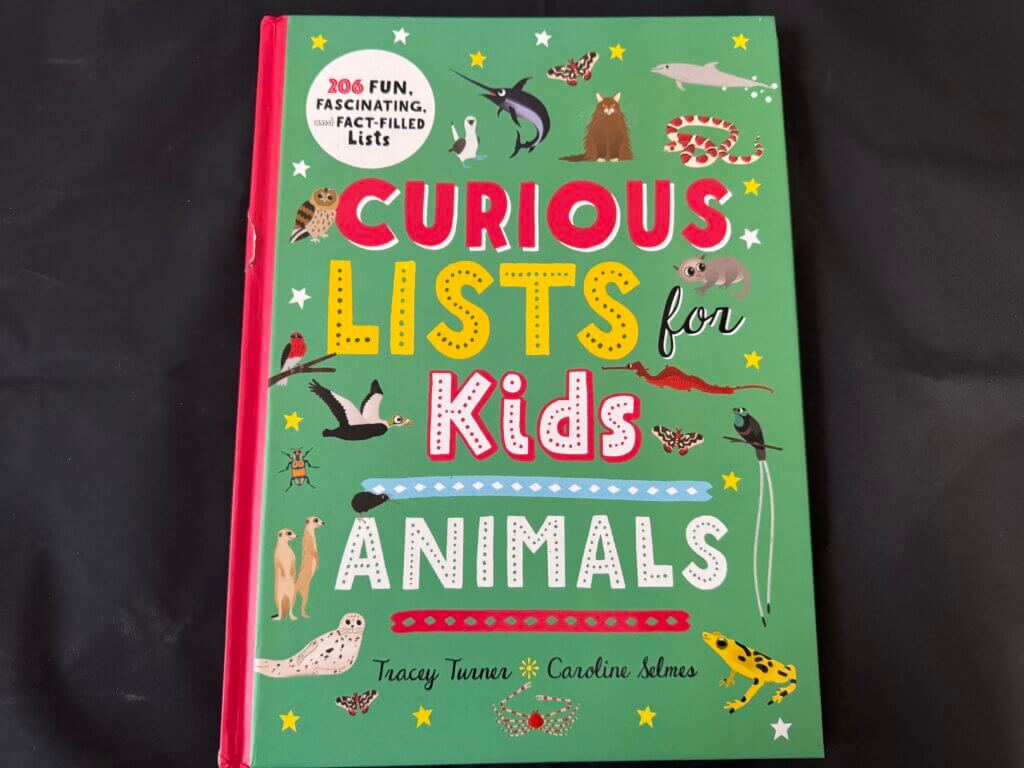
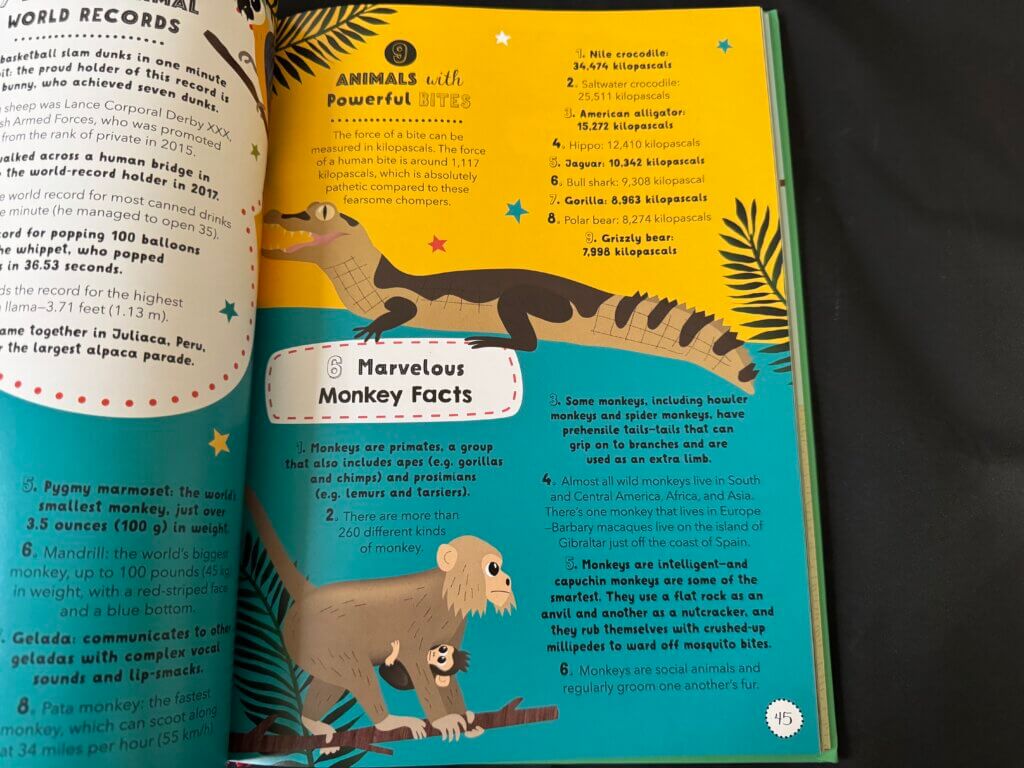
The sixth and final book is Curious Lists for Kids: Animals by Tracy Turner.
Right on the front cover, it advertises:
“206 fun, fascinating, fact-filled lists.”
On page 45, while discussing monkeys, the book states that Barbary macaques live on the island of Gibraltar.
Some might argue that books like this are the reason people mistakenly think Gibraltar is an island because they are being taught wrong.
But I don’t believe that explanation holds up.
People didn’t collectively misremember Gibraltar because of a handful of books.
These books exist because they are drawing from information that still exists somewhere — even if it no longer aligns with what we see today.
There is more going on here than meets the eye.
Final Thoughts
These six books span:
- Adult and children’s education
- Trivia, science, history, and storytelling
- Independent authors and major institutions
Yet they all share the same anomaly:
Gibraltar is referred to as an island.
This isn’t random.
This isn’t coincidence.
And it isn’t sloppy publishing.
It’s reality residue.
And if we pay close enough attention, it may help us better understand the hidden worlds that still exist alongside our own.